
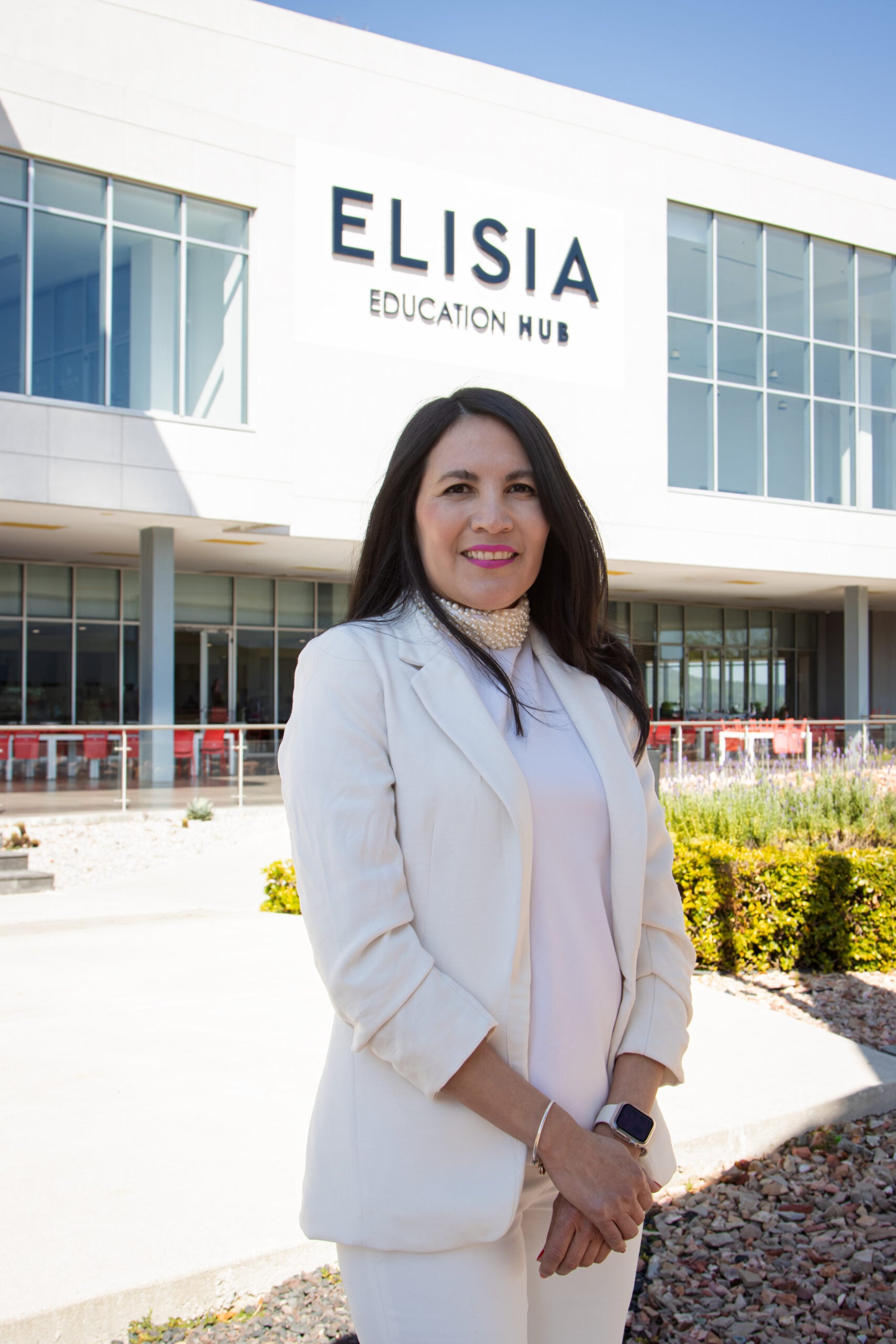
Dr. Rosalina Torres Ortega explores why Mexico’s nearshoring opportunity begins with the talent universities prepare today
The global economy is changing, and with it, the skills professionals need to succeed. In her article “Nearshoring frente la revisión del TMEC: retos y oportunidades en la educación superior” in Forbes, Dr. Rosalina Torres Ortega, professor at Arkansas State University Querétaro, explores how shifts in international trade are creating new opportunities for Mexico—and why higher education will play an essential role in turning those opportunities into long-term growth.
As companies reorganize their supply chains and look for production locations closer to their main markets, Mexico has gained relevance as a strategic destination for nearshoring. Its proximity to the United States and competitive position within North America create important advantages for attracting investment and generating specialized employment.
However, Professor Torres Ortega highlights an important challenge: location alone is not enough. For nearshoring to translate into meaningful economic development, Mexico needs professionals with the knowledge and skills required by an increasingly interconnected and competitive business environment.
Universities have a role beyond the classroom
According to the article, higher education institutions must continue evolving alongside the industries they serve. This includes developing academic programs connected to emerging market needs, strengthening collaboration between universities and companies, encouraging research projects, expanding the internationalization of academic programs, and reinforcing English-language preparation.
For students, this means that university education should not only provide theoretical knowledge. It should help them understand the forces shaping their industries, analyze real-world challenges, and develop the ability to adapt as markets continue to change. That preparation becomes especially relevant in fields such as business, international trade, finance, technology, engineering, and supply-chain management, where decisions made across countries can directly influence local companies and career opportunities.
Learning from professors who understand their field
The quality of a university experience is closely connected to the people leading the classroom.
Highly trained professors bring more than information to a course. Their specialized knowledge allows students to explore complex issues with greater depth, connect academic concepts with current challenges, and understand why what they are learning matters beyond an exam or assignment.
When faculty members bring advanced academic preparation and experience within their areas of expertise, students can learn from perspectives that connect theory, research, and the realities shaping their future professions.
At Arkansas State University Querétaro, this kind of academic environment gives students the opportunity to learn from professors whose expertise can help them see their field from a broader, international perspective.
About Dr. Rosalina Torres Ortega
Dr. Rosalina Torres Ortega studied International Economics at Universidad Autónoma de Baja California Sur before completing a Master’s in International Business at Universitat Autònoma de Barcelona. She later earned her doctorate from the same university, receiving the distinction excelent cum laude.
Today, she is a professor specializing in International Business at Arkansas State University Querétaro, bringing her academic expertise in international economics and business into the classroom.
Preparing for opportunities that are still taking shape
Professor Torres Ortega closes her article with a question that goes beyond trade agreements or investment figures: will Mexico have the human talent necessary to take advantage of the opportunities created by its position in North America?
Mexico may already have the geographic advantage. Developing the professionals capable of transforming that advantage into innovation, productivity, and sustainable growth is the next challenge.
For university students, that makes their education part of something larger.
The knowledge they develop today, the professors they learn from, and their ability to understand an increasingly global professional environment can prepare them not simply to enter the workforce, but to participate in the changes that will shape it.
Arkansas State University Querétaro – Where Great Stories Begin
Start your admissions process here
Follow us on social media!